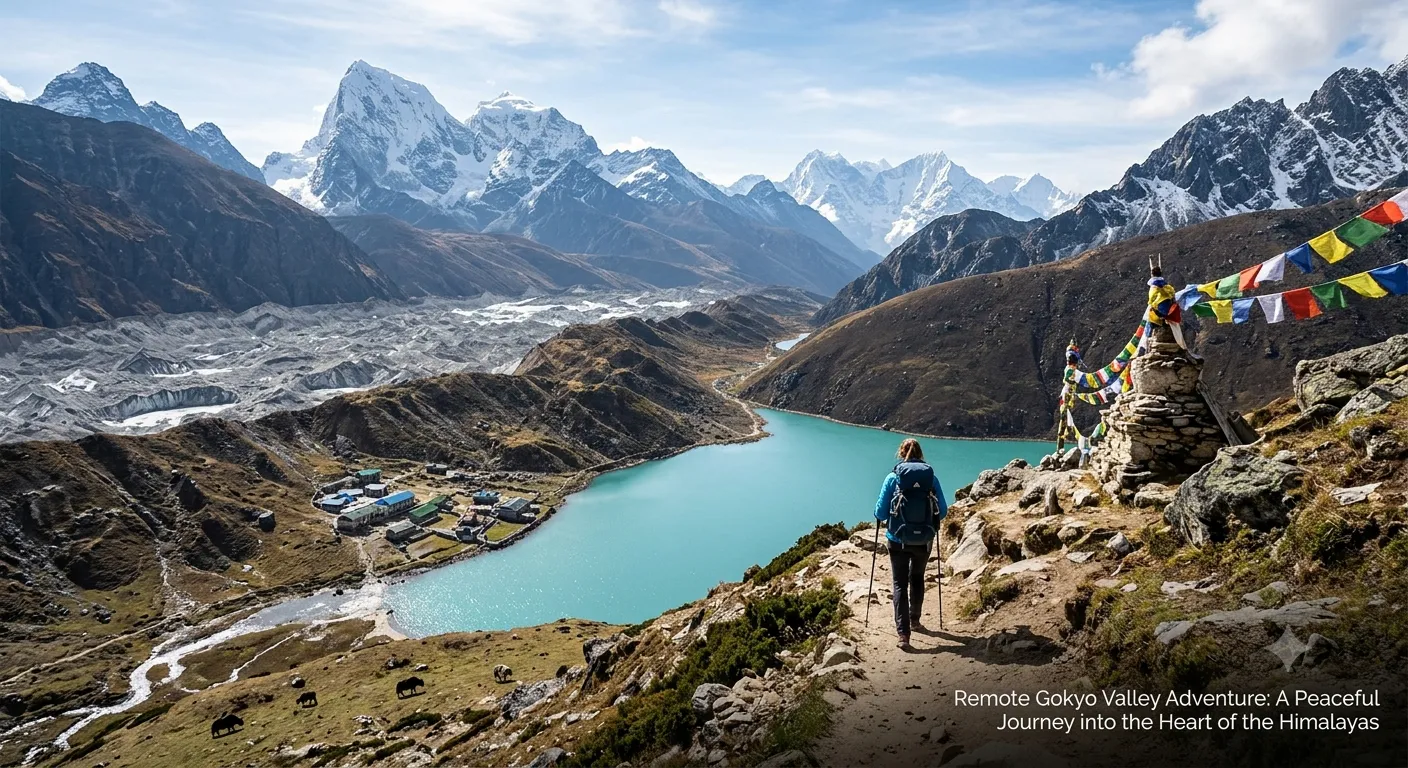
A remote Gokyo Valley adventure offers an extraordinary opportunity to explore one of the most beautiful and peaceful corners of the Everest region. While many trekkers follow the famous trail toward Everest Base Camp, the Gokyo Valley provides a quieter alternative filled with turquoise lakes, dramatic glaciers, traditional Sherpa villages, and spectacular Himalayan views. It is an ideal journey for travelers who want natural beauty, cultural encounters, and a genuine sense of wilderness.
Located in the high mountains of Nepal, the Gokyo Valley is known for its pristine landscapes and calm atmosphere. The route takes trekkers away from some of the busiest sections of the Everest region and leads into a remarkable world of alpine scenery. Every stage of the journey reveals something different, from forested trails and suspension bridges to wide glacial valleys and snow-covered peaks.
Why Choose a Remote Gokyo Valley Adventure?
The main attraction of a remote Gokyo Valley adventure is the combination of solitude and scenery. The Gokyo route receives fewer visitors than the classic Everest Base Camp trail, especially in its higher sections. This creates a more relaxed trekking experience where travelers can appreciate the mountains without constantly moving through large groups.
The scenery is equally impressive. Trekkers can enjoy views of some of the world’s highest mountains, including Everest, Lhotse, Makalu, and Cho Oyu. The landscape changes gradually as the trail climbs higher, creating a strong feeling of progression. Lower sections feature green hills and forests, while higher areas are dominated by rocky terrain, glaciers, lakes, and towering Himalayan peaks.
For photographers, nature enthusiasts, and trekkers seeking something different, this route offers endless inspiration.
The Journey Through Traditional Mountain Villages
A typical Gokyo journey begins with travel into the Everest region, followed by trekking through traditional settlements. The route commonly passes through villages such as Phakding and Namche Bazaar before continuing toward quieter areas.
Namche Bazaar is an important stop because it allows trekkers to acclimatize while experiencing the culture of the Khumbu region. From there, the path gradually separates from the main Everest Base Camp route and enters a more peaceful environment.
Small settlements along the way provide simple accommodation, warm meals, and opportunities to interact with local people. These villages reflect the resilience of communities that have lived in the high Himalayas for generations. Stone houses, prayer flags, monasteries, mani walls, and mountain lodges add cultural depth to the trekking experience.
Discovering the Famous Gokyo Lakes
The magnificent Gokyo Lakes are among the greatest highlights of a remote Gokyo Valley adventure. These high-altitude freshwater lakes are famous for their striking shades of blue and turquoise. Surrounded by barren hills, glaciers, and snowy mountains, they create one of the most distinctive landscapes in the Himalayas.
As trekkers approach Gokyo village, the environment becomes increasingly dramatic. The lakes appear almost unreal against the rugged mountain terrain. Depending on the weather and sunlight, their colors can change throughout the day.
Gokyo village itself is located beside one of the main lakes and serves as a comfortable base for exploration. Spending time here allows travelers to enjoy the peaceful surroundings and prepare for one of the trek’s most memorable viewpoints.
Sunrise from Gokyo Ri
Climbing Gokyo Ri is a major objective of the journey. Although the ascent can be physically demanding because of the altitude, the panoramic views from the top make the effort worthwhile.
Trekkers often begin early in the morning to reach the viewpoint around sunrise. From the summit area, the Himalayan panorama stretches across the horizon. Everest, Lhotse, Makalu, and Cho Oyu can all be seen in favorable conditions, along with numerous other peaks.
Below, the Gokyo Lakes add brilliant color to the vast mountain landscape. The immense Ngozumpa Glacier can also be seen extending through the valley. This combination of lakes, glaciers, and high peaks makes Gokyo Ri one of the finest viewpoints in the Everest region.
Walking Beside the Ngozumpa Glacier
Another remarkable feature of a remote Gokyo Valley adventure is the opportunity to explore the area around the Ngozumpa Glacier. This enormous glacier creates a rugged landscape of ice, rock, and moraine.
Walking near such a massive natural formation provides a clear sense of the scale and power of the Himalayas. The terrain can appear harsh and isolated, yet it has a unique beauty. The glacier also gives the Gokyo route a distinctive character compared with other trekking trails in Nepal.
Trekkers should always follow established paths and listen to experienced guides, as glacial environments can be complex and conditions may change.
Physical Preparation and Acclimatization
A Gokyo Valley trek requires good preparation. Long walking days, steep ascents, cold temperatures, and high altitude can make the journey challenging. However, travelers with reasonable fitness and proper acclimatization can complete the route successfully.
Training before the trek should include regular walking, hiking, stair climbing, and cardiovascular exercise. Strengthening the legs and improving endurance can make daily trekking more comfortable.
Acclimatization is equally important. The itinerary should allow enough time for the body to adjust gradually to increasing elevation. Trekkers should maintain a steady pace, stay hydrated, eat properly, and communicate any symptoms of altitude illness immediately.
Best Time for the Adventure
Spring and autumn are generally the most popular seasons for a remote Gokyo Valley adventure. Spring offers improving temperatures, clearer periods, and attractive mountain scenery. Autumn is widely appreciated for stable conditions and excellent visibility.
Winter can provide exceptional solitude and crisp views, but temperatures are much colder and snow may affect trail conditions. The monsoon season brings clouds, rainfall in lower areas, and reduced mountain visibility, making trekking more complicated.
Regardless of the season, mountain weather can change quickly. Proper clothing and flexible planning are essential.
Essential Items to Pack
A successful trek depends heavily on suitable equipment. Important items include sturdy trekking boots, layered clothing, a warm insulated jacket, waterproof outerwear, gloves, a hat, sunglasses, and a reliable sleeping bag. Sun protection is especially important at high altitude because ultraviolet exposure can be intense.
Trekkers should also carry a reusable water bottle, personal medication, basic first-aid supplies, trekking poles, and a headlamp. Packing efficiently is important because unnecessary weight can make long days more difficult.
A Himalayan Experience Worth Remembering
A remote Gokyo Valley adventure is much more than a high-altitude trek. It is a journey through quiet valleys, Sherpa settlements, turquoise lakes, enormous glaciers, and some of the most impressive mountain scenery on Earth. The route rewards travelers with a sense of discovery that can be difficult to find on more crowded trails.
For those who want to experience the Everest region from a different perspective, Gokyo Valley is an outstanding choice. Its combination of peaceful trails, cultural richness, physical challenge, and extraordinary landscapes creates a deeply memorable Himalayan journey. With careful preparation, proper acclimatization, and respect for the mountain environment, this adventure can become one of the most rewarding trekking experiences in Nepal.
Offbeat Trekking Route Near Everest: Discover a Quieter Side of the Himalayas
The Everest region is famous worldwide for dramatic mountain scenery, legendary climbing history, and unforgettable trekking experiences. While many travelers follow the popular trail toward Everest Base Camp, adventurous trekkers often search for something quieter and more authentic. Choosing an offbeat trekking route near Everest offers a remarkable opportunity to explore remote valleys, peaceful villages, hidden viewpoints, and traditional Himalayan landscapes away from the busiest paths.
An alternative journey in the Everest region is ideal for travelers who want more than a famous destination. It allows them to experience the mountains at a slower pace, connect with local communities, and enjoy the silence of the high Himalayas. From lesser-known ridges to secluded valleys, the wider Everest region has several rewarding possibilities for those willing to explore beyond the standard itinerary.
Why Choose an Offbeat Trekking Route Near Everest?
The main reason to choose an offbeat trekking route near Everest is the sense of peace and discovery. Popular trekking trails can become busy during the peak seasons of spring and autumn. In contrast, quieter routes often provide a more personal connection with the landscape.
Walking on less crowded trails gives trekkers time to appreciate small details. Prayer flags moving in the mountain wind, stone houses surrounded by potato fields, distant yak bells, and peaceful monasteries all become meaningful parts of the journey. Without large groups moving along the same path, the trekking experience can feel more natural and immersive.
Another advantage is cultural interaction. Remote settlements often preserve traditional ways of life more strongly than major trekking hubs. Visitors may encounter local farming practices, Buddhist customs, family-run lodges, and centuries-old trade routes. These experiences add depth to a Himalayan adventure.
Explore the Hidden Side of the Everest Region
The wider Everest area contains much more than the famous trail to base camp. Trekkers can explore routes leading toward quiet Sherpa villages, remote viewpoints, high-altitude lakes, and secluded mountain passes. Some trails branch away from the main route and enter landscapes where only a limited number of international visitors travel each season.
Areas around Gokyo Lakes are known for turquoise water, enormous glaciers, and panoramic mountain views. Other routes may pass through peaceful settlements or follow high ridges with views of Mount Everest, Lhotse, Makalu, and Ama Dablam.
An offbeat route does not always mean extreme technical difficulty. Some alternatives are moderate treks that simply receive fewer visitors. Others involve demanding passes, longer walking days, or more remote terrain. This variety makes it possible to choose an itinerary based on fitness, available time, and previous trekking experience.
Authentic Sherpa Culture and Mountain Villages
One of the strongest reasons to explore an offbeat trekking route near Everest is the opportunity to experience Sherpa culture in a more intimate setting. The Everest region is home to communities with deep spiritual and historical connections to the mountains.
On quieter trails, trekkers may visit small monasteries, traditional homes, mani walls, chortens, and ancient pathways. Local lodges often provide simple but warm hospitality. Spending evenings in smaller villages can create opportunities for meaningful conversations and a better understanding of life at high altitude.
These cultural encounters are not merely additional attractions. They are central to the identity of the region. Respecting local traditions, walking clockwise around religious monuments, dressing appropriately near monasteries, and supporting locally owned businesses can make the journey more responsible and rewarding.
Spectacular Scenery Without the Heavy Crowds
A lesser-known route can still provide exceptional Himalayan scenery. In many cases, quieter trails reveal completely different perspectives of the same legendary mountains. Trekkers may cross suspension bridges, walk through rhododendron forests, climb above the tree line, and reach open ridges surrounded by snow-covered peaks.
The changing landscape is one of the highlights of trekking near Everest. Lower elevations may feature forests and cultivated terraces, while higher areas become increasingly rugged. Glacial valleys, rocky moraines, frozen streams, and vast alpine terrain create a powerful sense of wilderness.
For photographers, an offbeat trekking route near Everest can be especially attractive. Fewer people on the trail make it easier to capture peaceful landscapes, traditional villages, and uninterrupted mountain views.
Best Time for an Offbeat Everest Trek
Spring and autumn are generally considered the most favorable trekking seasons. From March to May, the region experiences warmer conditions, flowering rhododendrons at lower elevations, and excellent mountain scenery. From late September through November, stable weather and clear skies often provide outstanding visibility.
Winter trekking is possible on selected lower or moderate routes, although temperatures can become extremely cold. High passes may receive heavy snowfall. The summer monsoon season brings rain, clouds, slippery trails, and possible flight disruptions.
Weather in the Himalayas can change quickly in any season. Proper clothing, flexible planning, and realistic expectations are therefore essential.
Preparation and Responsible Trekking
Even a quiet alternative route requires careful preparation. Trekkers should consider altitude, daily walking distance, accommodation availability, weather conditions, and emergency access. Gradual acclimatization is particularly important when traveling above 3,000 meters.
A suitable packing list should include layered clothing, reliable trekking boots, rain protection, sun protection, water purification options, and basic personal medical supplies. Travel insurance that covers high-altitude trekking and emergency evacuation is also highly advisable.
Responsible travel matters greatly in remote mountain environments. Trekkers should avoid unnecessary plastic waste, refill water where safe, respect wildlife, and follow local guidance. Supporting local lodges, guides, porters, and community businesses helps ensure that tourism benefits the people who live in the region.
Final Thoughts
Choosing an offbeat trekking route near Everest is an excellent way to discover a quieter, deeper, and more authentic side of the Himalayas. Instead of focusing only on famous checkpoints, trekkers can experience remote valleys, peaceful villages, rich Sherpa culture, and magnificent mountain scenery at a more personal pace.
For travelers who value solitude, cultural connection, and genuine exploration, the lesser-known trails around Everest offer exceptional rewards. With careful preparation and respect for local communities, an offbeat Himalayan journey can become one of the most memorable trekking experiences in Nepal.